
Gartner Security & Risk Management Summit 2026 Takeaways
Explore key cybersecurity takeaways from Gartner Security & Risk Management Summit 2026, including agentic AI, Shadow AI, phishing, human risk, and...
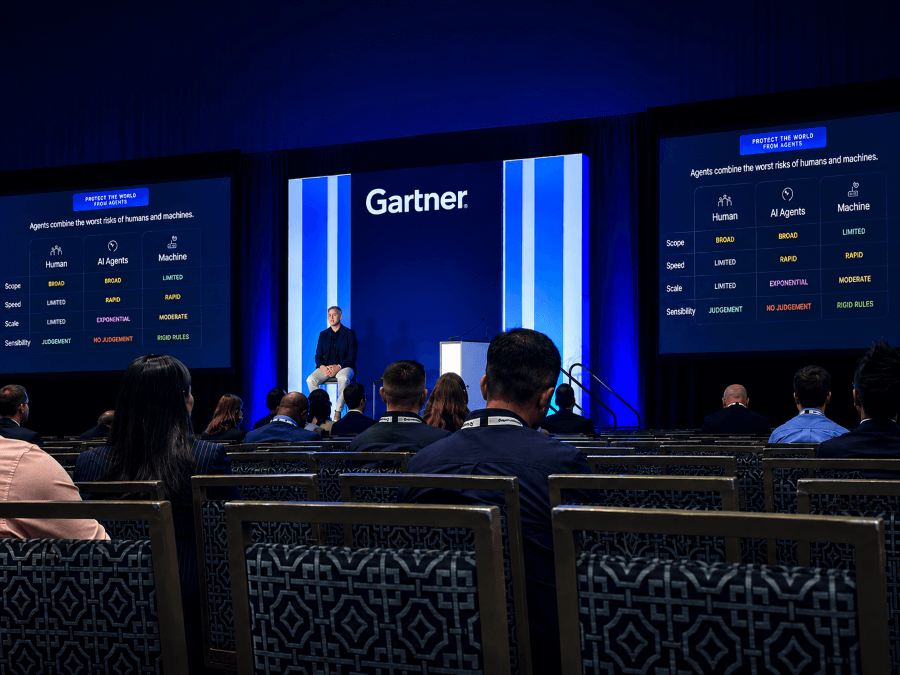
Gartner Security & Risk Management Summit 2026: Key Takeaways for Security Leaders
The Gartner Security & Risk Management Summit 2026 brought together security leaders, practitioners, and technology vendors to discuss the evolving cybersecurity landscape. While topics ranged from cyber resilience to emerging technologies, one theme consistently dominated conversations throughout the event: the growing impact of artificial intelligence on cybersecurity.
From managing agentic AI systems to defending against increasingly sophisticated social engineering attacks, organizations are entering a new era of cyber risk. Below are some of the key themes and takeaways from this year's summit.
AI and Agentic AI Are Reshaping Security Programs
Artificial intelligence was at the center of many sessions, with particular attention focused on agentic AI: AI systems capable of performing tasks autonomously on behalf of users or organizations.
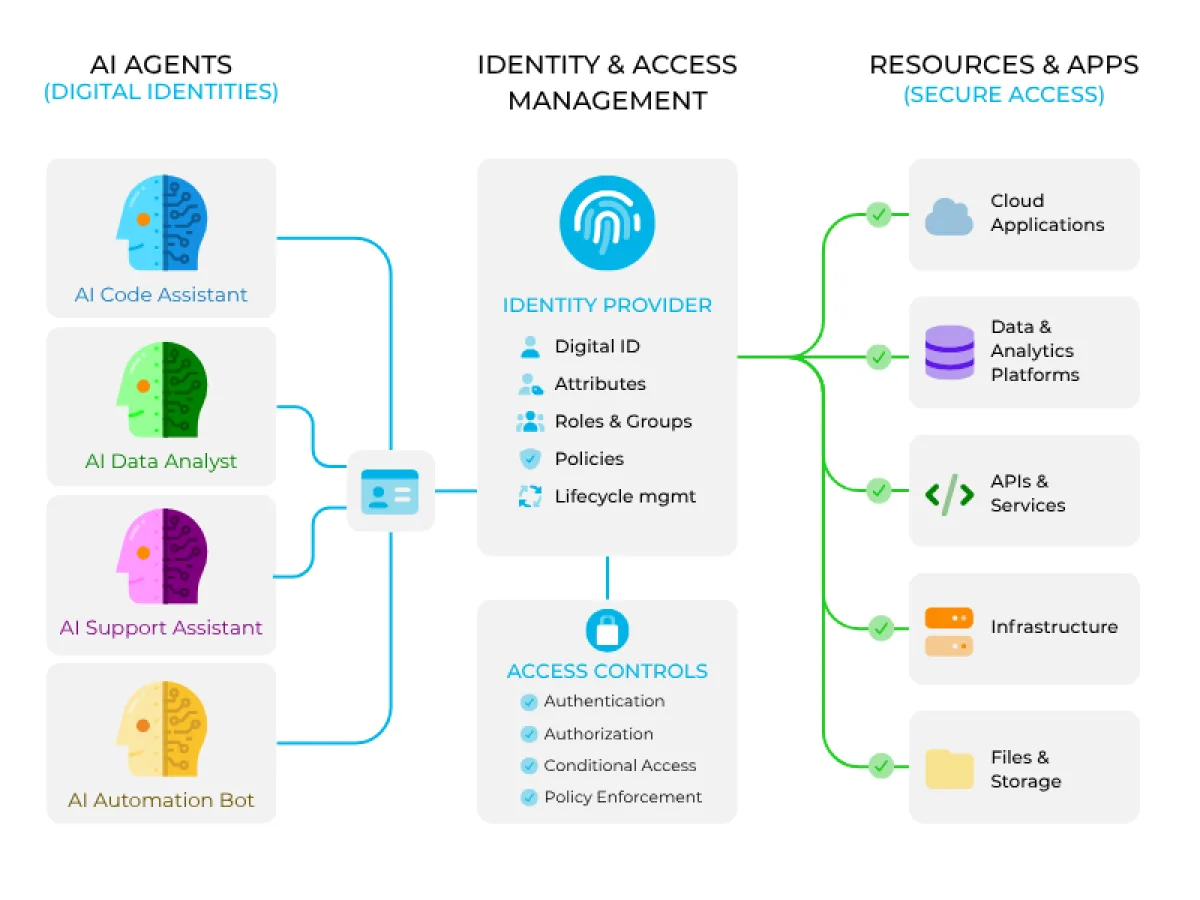
A recurring message from Gartner presenters was that organizations must begin treating AI agents similarly to human employees when it comes to governance and identity management.
AI Agents Need Identity and Accountability
During sessions focused on agentic AI governance, Peter Bailey of Cisco and Saira Mohammed of Microsoft emphasized the need for organizations to treat AI agents similarly to human employees from an identity and access management perspective. As organizations deploy more AI-powered assistants, copilots, and autonomous workflows, security teams need visibility into every AI agent operating within their environment.
- Assigning unique identities to AI agents
- Defining clear scopes and permissions for each agent
- Extending Zero Trust principles to the agentic workforce
- Tracking AI agents within identity and access management systems
Both speakers highlighted the risks associated with unmanaged AI identities. One example discussed involved employees leaving an organization while the AI agents they created remain active. Without proper governance, organizations risk accumulating unmanaged AI systems with access to sensitive data and business processes.
The Growing Challenge of Shadow AI
Another major concern is the rise of Shadow AI: the use of unauthorized AI tools and services by employees.
Noora Ahmed-Moshe of Hoxhunt discussed the growing challenge of Shadow AI and agent sprawl. A key takeaway was that most unauthorized AI usage is not driven by malicious intent. Instead, employees often turn to AI tools because they are attempting to work more efficiently and solve business problems faster.
- Understanding employee needs
- Providing approved AI solutions
- Establishing governance policies
- Monitoring AI usage appropriately
- Creating clear guidelines for responsible AI adoption
The message was clear: organizations that embrace and govern AI effectively will likely achieve better security outcomes than those that attempt to prohibit its use entirely.
AI Should Augment Humans, Not Replace Them
Despite the excitement surrounding AI, many speakers reinforced a consistent principle: AI works best when enhancing human capabilities, not replacing human judgment.
Security teams are increasingly using AI to improve productivity, automate repetitive tasks, and accelerate investigations. However, strategic decision-making, risk assessment, and crisis management still require human oversight.
Organizations should view AI as a force multiplier that enables employees to work more effectively rather than as a replacement for experienced personnel.
Cyber Resilience Requires Adaptability
One of the summit's most memorable sessions featured Gartner's Christopher Mixter alongside renowned humanitarian chef José Andrés, founder of World Central Kitchen. Their discussion focused on cyber resilience, crisis response, and the reality that plans rarely survive first contact with a real-world event.
Drawing from his experience responding to hurricanes, earthquakes, wildfires, and humanitarian crises, Andrés explained that World Central Kitchen cannot rely on a single predetermined playbook. Teams must constantly adapt based on available resources, infrastructure conditions, and the unique challenges of each disaster. The lesson translated directly to cybersecurity: successful response teams must be prepared to adjust when events unfold differently than expected.
The ability to adapt during a crisis is often more important than the plan itself.
One particularly memorable takeaway was the idea that during a cyber crisis, delayed decision-making can be more damaging than making an imperfect decision.
- Empower response teams to act quickly
- Reduce bureaucratic bottlenecks during incidents
- Practice decision-making under pressure
- Build flexibility into response plans
In other words, resilience is not simply about preparation. It is also about adaptability.
The Human Element Remains One of the Biggest Security Risks
Despite advances in security technologies, human behavior continues to play a significant role in cybersecurity incidents.
Several sessions referenced findings from Verizon's 2026 Data Breach Investigations Report, which found that 62% of breaches involve the human element.
This statistic reinforces a reality security professionals have faced for years: attackers continue to target people because it works.
Spear Phishing Is Becoming More Sophisticated
One of the most concerning trends discussed at the summit was the evolution of spear phishing attacks.
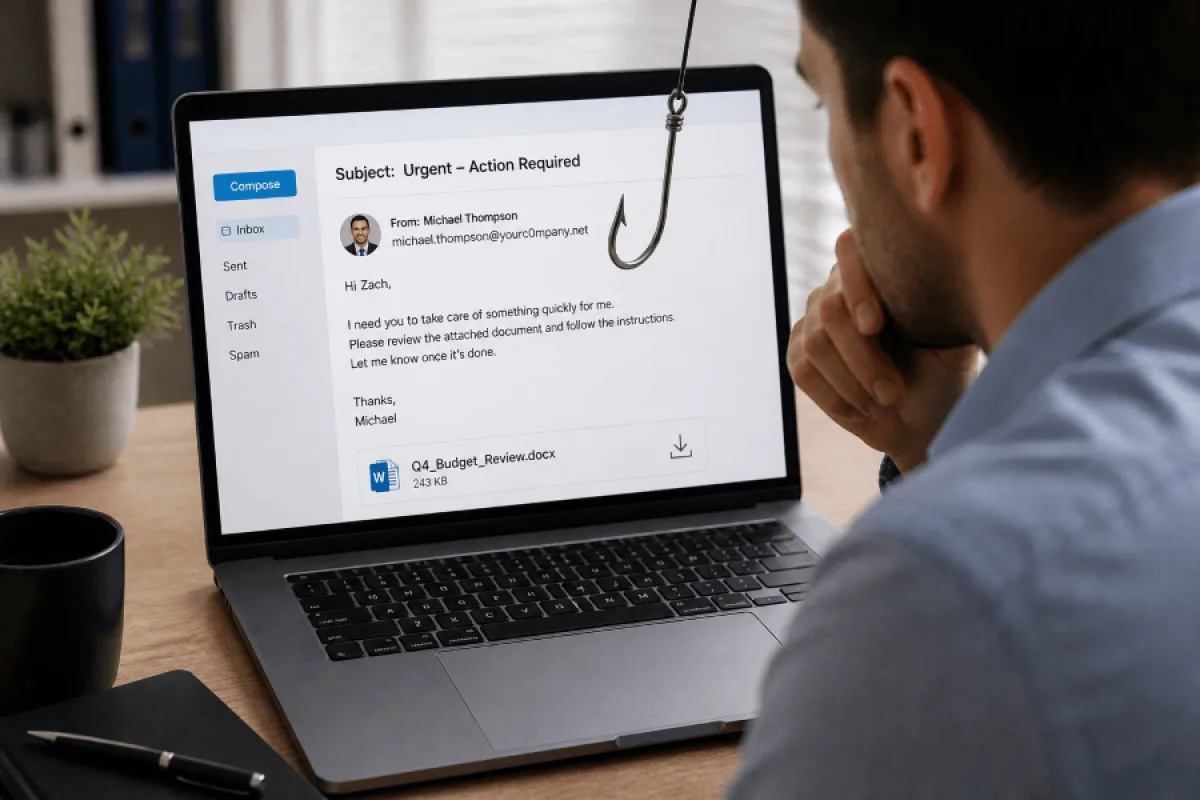
Seth Williams of Sublime Security highlighted how threat actors are increasingly leveraging AI to automate reconnaissance and improve the quality of social engineering attacks. Rather than manually researching targets, attackers can now use AI tools to rapidly collect publicly available information and generate highly personalized phishing messages.
Modern spear phishing campaigns often begin by building trust before attempting to steal credentials, money, or sensitive information. Attackers may send entirely benign messages initially, establishing credibility and creating a relationship with the target before introducing a malicious request.
Artificial intelligence is accelerating this trend.
Williams demonstrated how threat actors can leverage publicly available information from sources such as:
- X, formerly Twitter
- Company websites
- Professional directories
- Email intelligence platforms
- Public data repositories
Using this information, attackers can create highly personalized phishing messages that closely mimic legitimate business communications.
The result is a new generation of social engineering attacks that are more convincing and more difficult for employees to identify.
Email Remains a Primary Attack Surface
Although organizations continue investing in endpoint, cloud, and identity security, email remains one of the most frequently exploited attack vectors.
Mick Leach discussed how email continues to be one of the most exploited attack surfaces despite advances in security controls. His session highlighted several attack types that regularly bypass technical defenses because they focus on manipulating human behavior rather than exploiting software vulnerabilities.
These attack types include:
- Sextortion scams
- Payroll fraud
- Vendor email compromise
- Business email compromise
- Executive impersonation attacks
In many cases, the attacks themselves are not highly technical. Instead, they rely on psychological manipulation and social engineering.
This reality reinforces the need for organizations to combine technical defenses with ongoing security awareness training and phishing simulation programs.
Security Awareness Programs Must Avoid Being Punitive
Another notable discussion focused on the effectiveness of security awareness initiatives.
Speakers emphasized that phishing simulations and awareness programs should be designed to educate employees, not punish them.
Organizations that create a culture of blame may discourage employees from reporting suspicious activity or seeking assistance when mistakes occur.
- Positive reinforcement
- Continuous learning
- Constructive feedback
- Building security confidence
- Encouraging threat reporting
The goal is to create a workforce that actively participates in defending the organization rather than one that fears making mistakes.
Preparing for the Post-Quantum Era
The cybersecurity industry is also beginning to shift its focus toward the post-quantum future.
While large-scale quantum computing threats may still be developing, organizations are increasingly evaluating their cryptographic readiness and long-term migration strategies.
- Which systems rely on vulnerable cryptographic algorithms
- Potential impacts of future quantum computing capabilities
- Emerging post-quantum cryptography standards
- Long-term transition requirements
Although quantum threats may not be immediate for every organization, planning efforts are already underway across many industries.
Final Thoughts
Looking Ahead
The Gartner Security & Risk Management Summit 2026 highlighted how rapidly cybersecurity continues to evolve. Artificial intelligence, agentic systems, cyber resilience, social engineering, and post-quantum security are all reshaping how organizations approach risk management.
At the same time, one message remained remarkably consistent throughout the event: people continue to play a central role in both cyber risk and cyber defense.
As organizations adopt new technologies and prepare for emerging threats, security leaders must balance innovation with governance, resilience, and employee education. The organizations that succeed will be those that combine strong technical controls with effective human-focused security strategies.
The future of cybersecurity may be increasingly driven by AI, but human judgment, awareness, and adaptability remain indispensable.
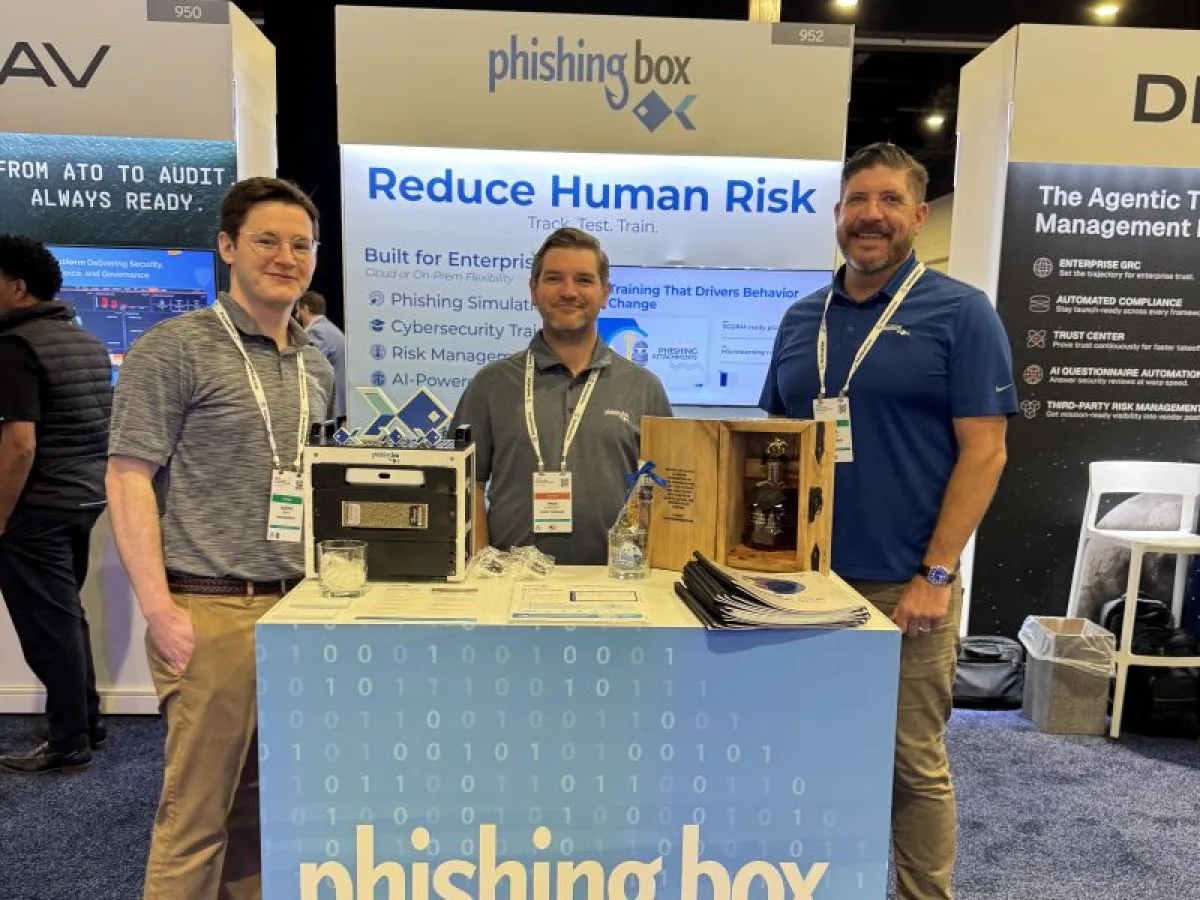
Thank You, Gartner
We would like to thank Gartner, the speakers, sponsors, and attendees who made this year's Security & Risk Management Summit a valuable experience. The event provided meaningful insights into some of the most important challenges facing security leaders today, from managing agentic AI and Shadow AI to strengthening cyber resilience and addressing the human element of cybersecurity.
We appreciate the opportunity to learn from industry experts, practitioners, and fellow security professionals, and we look forward to continuing these conversations throughout the year.
We'll see everyone at Gartner Security & Risk Management Summit 2027.