
Test the behaviors that matter
Use phishing simulations and campaign results to understand where employees need reinforcement before real attackers do.
Embed security awareness with PhishingBox courses, phishing-triggered remediation, SecurityTips reinforcement, and compliance reporting.
Modern security awareness programs need more than a yearly checkbox. PhishingBox helps teams train continuously with scheduled courses, phishing-driven training moments, new hire assignments, SecurityTips reminders, and reporting that shows progress over time.
Use the platform to build a repeatable awareness rhythm that supports compliance, reduces human risk, and keeps employees engaged with short, relevant training touchpoints throughout the year.
Use phishing simulations and campaign results to understand where employees need reinforcement before real attackers do.
Launch annual assignments, new hire courses, phishing follow-up, micro lessons, and SCORM-ready content from one program.
Promote bite-size awareness through SecurityTips so secure behavior stays visible inside the modern workforce.
Track assignments, completions, remediation, and repeat risk so program evidence is easier to review and share.
Security awareness training helps employees understand the day-to-day behaviors behind stronger compliance programs. Use PhishingBox to assign training, reinforce policy expectations, and keep completion evidence ready for internal reviews, customer questionnaires, and audits.
Support security, availability, confidentiality, and privacy control awareness with recurring employee training.
Reinforce safe handling of PHI, privacy responsibilities, and reporting habits for healthcare workflows.
Train employees on payment data security, phishing risk, credential hygiene, and suspicious request handling.
Align awareness with information security management expectations and secure day-to-day behavior.
Help users recognize personal data, reduce unsafe sharing, and respond to privacy concerns appropriately.
Adapt training assignments and evidence to internal policies, industry requirements, and client obligations.
Compliance badges are neutral PhishingBox page assets, not third-party certification logos or legal compliance claims.
SecurityTips turns awareness into a lightweight, recurring habit. Use it to promote practical cybersecurity reminders, reinforce phishing and privacy lessons, and keep security visible without waiting for the next course deadline.
Pair SecurityTips with PhishingBox training campaigns to create a continuous program that feels more natural for hybrid, remote, and fast-moving teams.
 In-the-flow awareness reinforcement
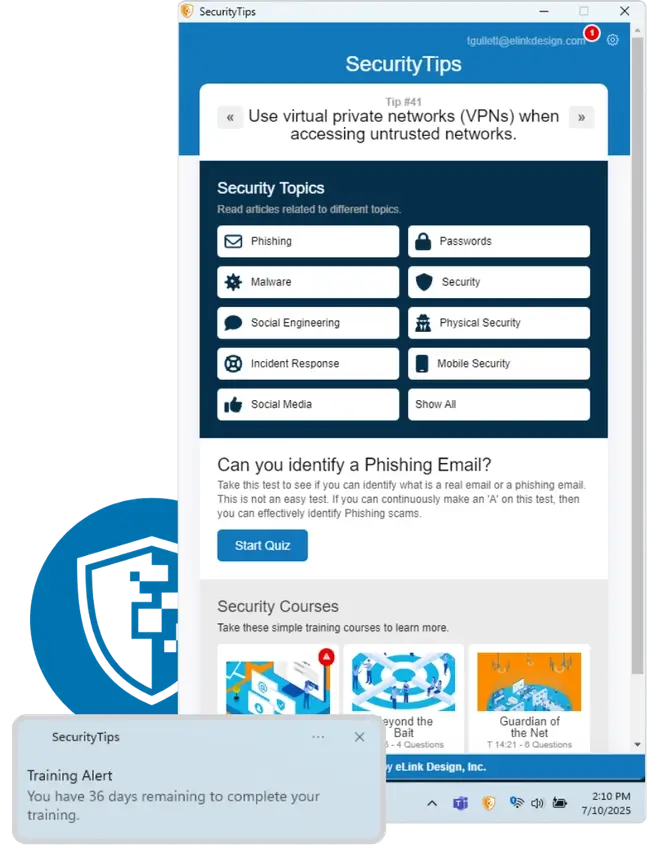
When the deadline passes, training should not turn into a spreadsheet and a trail of reminder emails. The Training Wall puts required courses directly in the employee's path, so the next move is clear: complete the assignment, then get back to work.
Set the training, embed it in the portal or workflow your team already opens, and let SecurityTips handle the firm nudge. Completion becomes part of doing the job instead of one more thing admins have to chase.
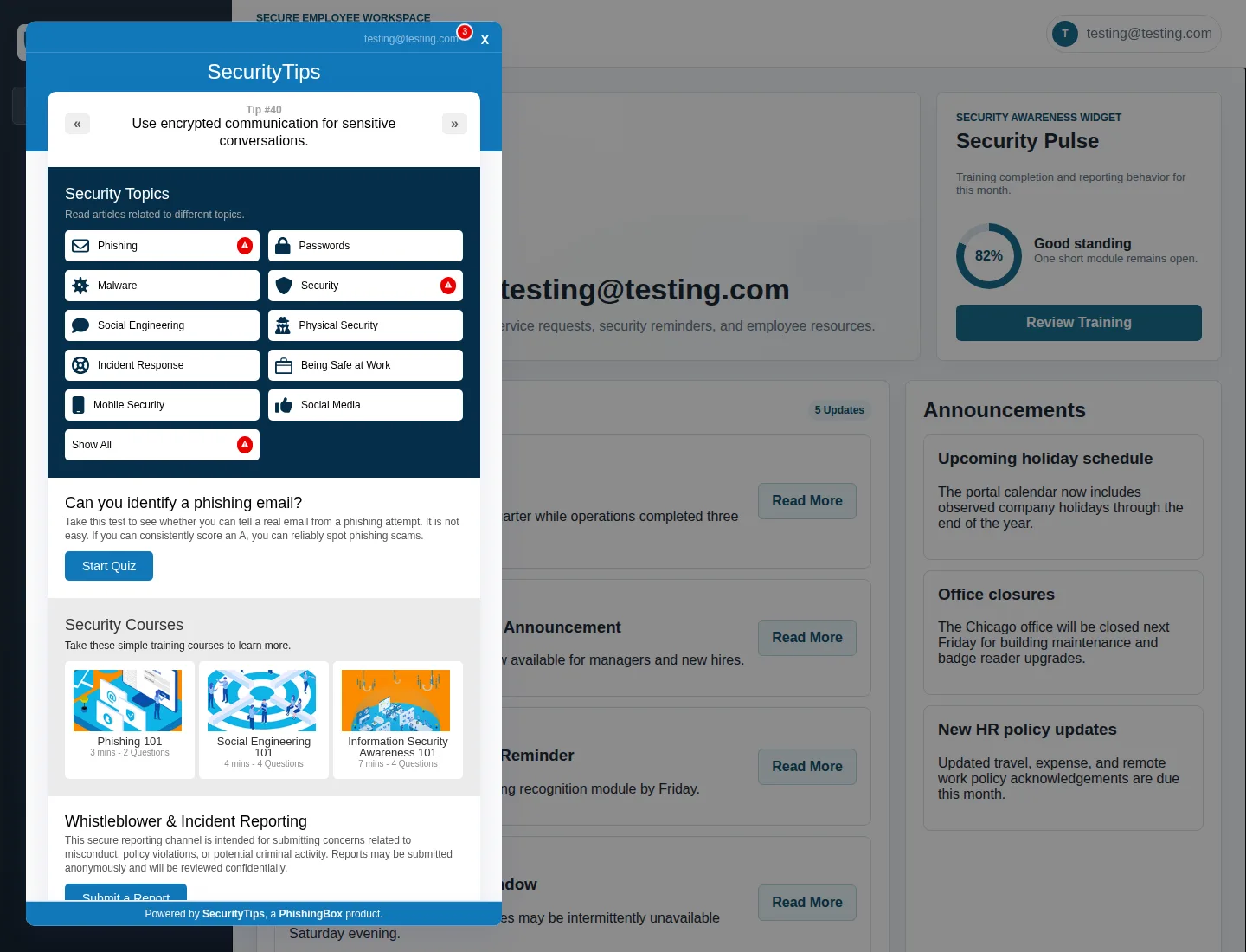
Use PhishingBox courses for onboarding, annual training, compliance reinforcement, and phishing follow-up. The examples below show how a security awareness program can cover phishing, privacy, healthcare, GDPR, information security, and emerging AI risks.
 Core Course
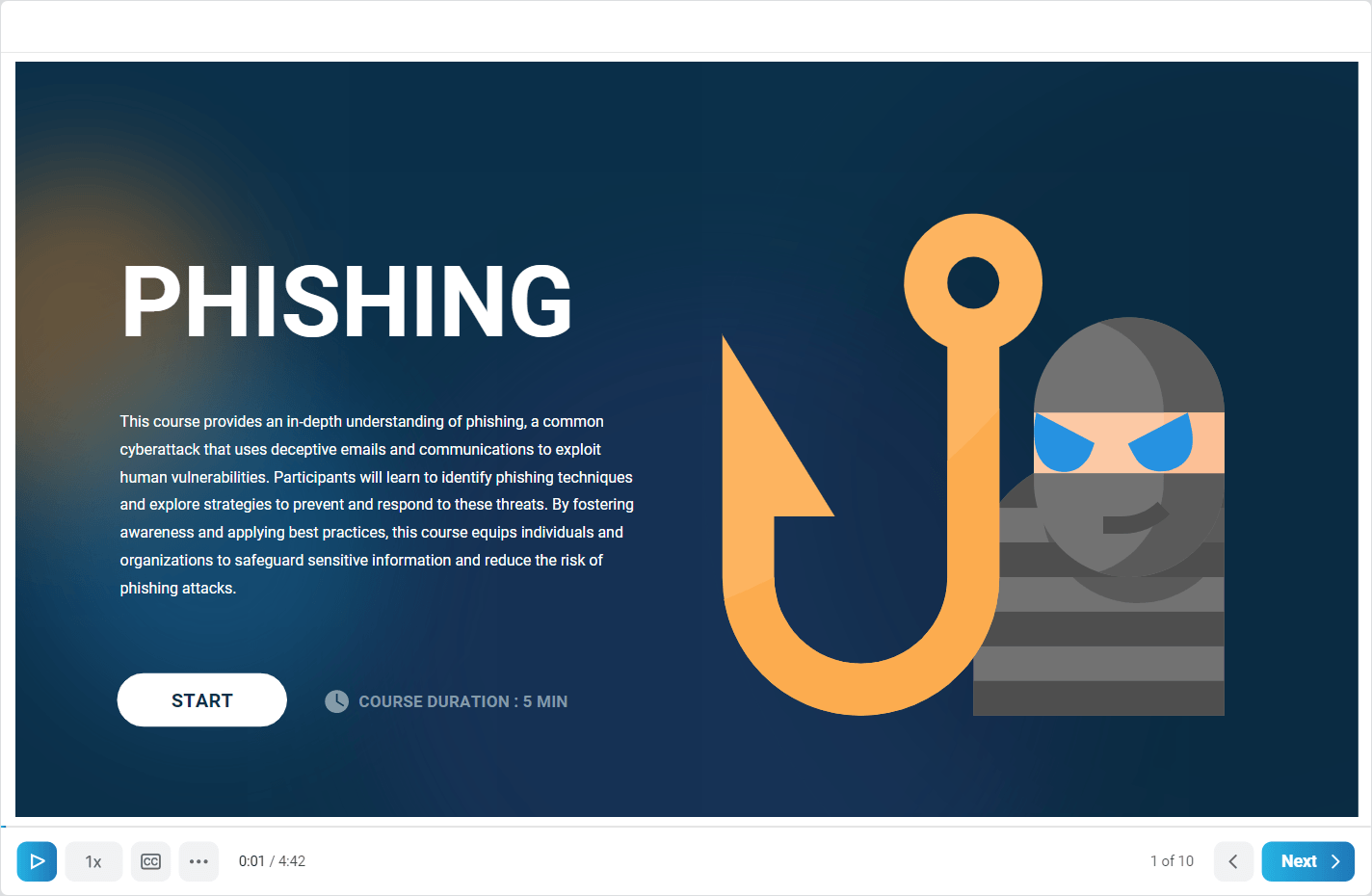
Phishing Awareness
Teach employees to recognize deceptive emails, malicious links, attachment tricks, and urgency cues before they click.
Core Course
Phishing Awareness
Teach employees to recognize deceptive emails, malicious links, attachment tricks, and urgency cues before they click.
 Core Course
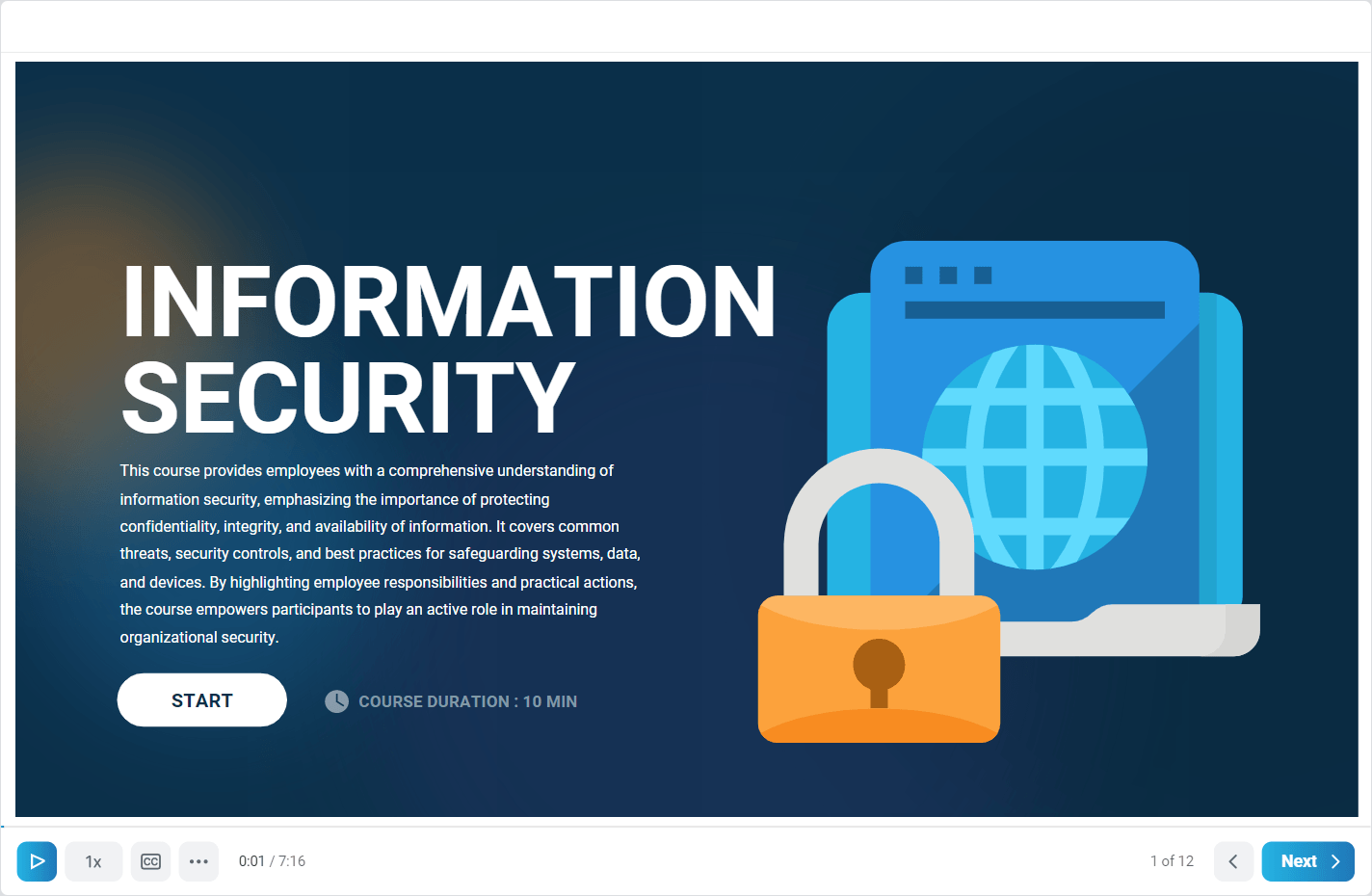
Information Security Awareness
Cover the core behaviors behind a stronger security culture, including safe handling, reporting, authentication, and incident awareness.
Core Course
Information Security Awareness
Cover the core behaviors behind a stronger security culture, including safe handling, reporting, authentication, and incident awareness.
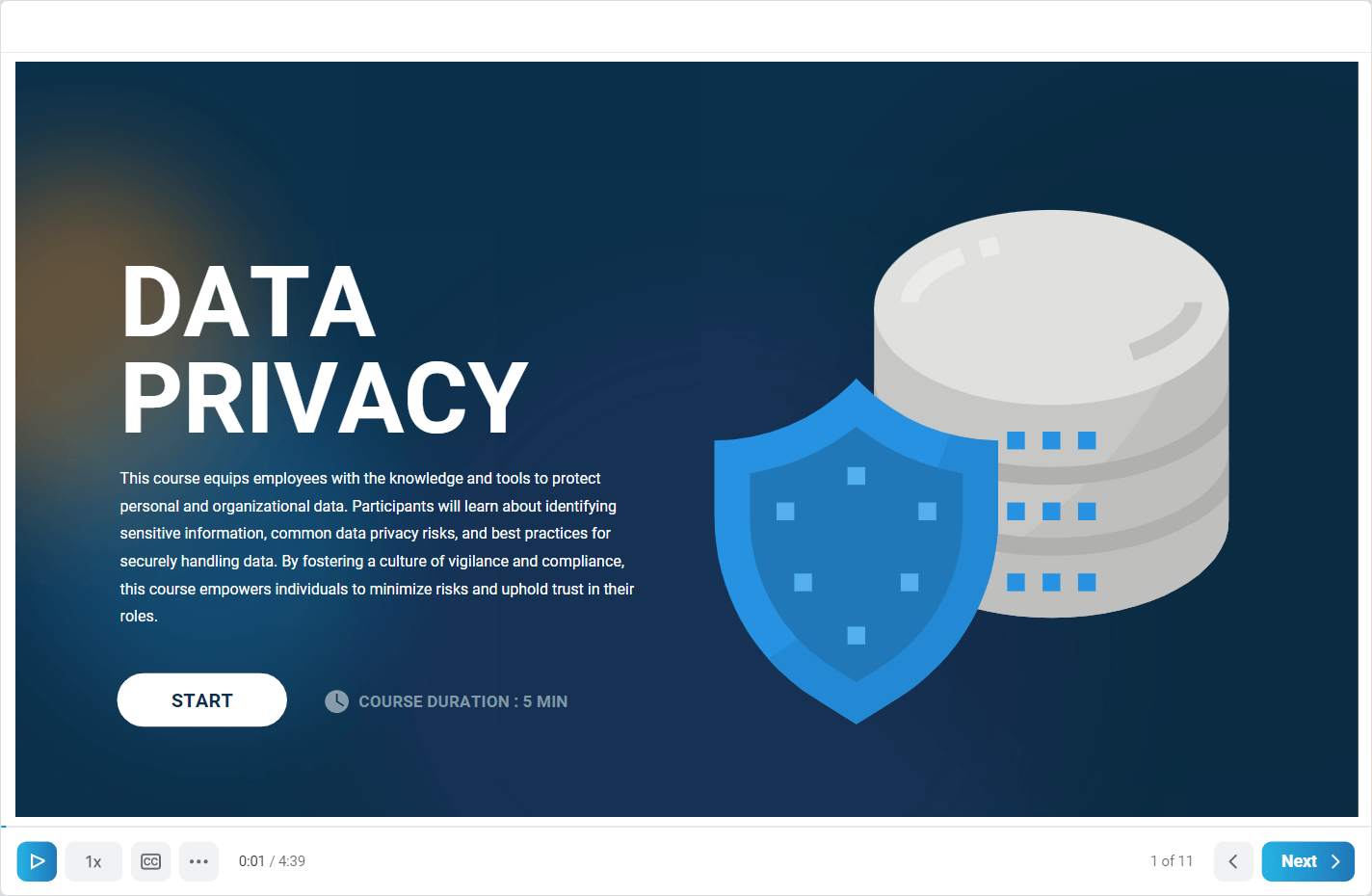 Core Course
Data Privacy
Help employees handle personal and sensitive data responsibly, reduce oversharing, and support privacy obligations across everyday work.
Core Course
Data Privacy
Help employees handle personal and sensitive data responsibly, reduce oversharing, and support privacy obligations across everyday work.
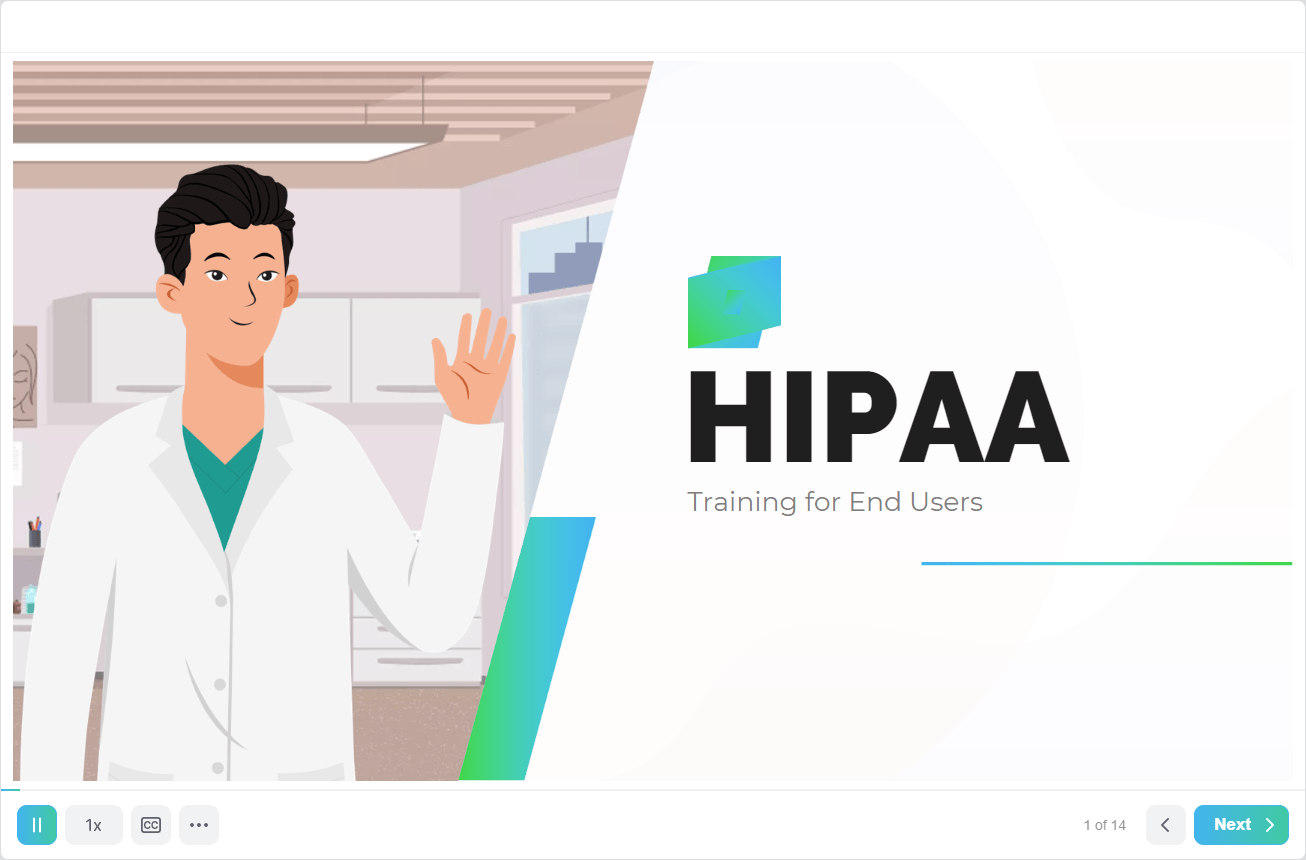 Core Course
HIPAA Training for End Users
Help employees understand HIPAA responsibilities, protect patient information, and handle healthcare data more safely in day-to-day work.
Core Course
HIPAA Training for End Users
Help employees understand HIPAA responsibilities, protect patient information, and handle healthcare data more safely in day-to-day work.
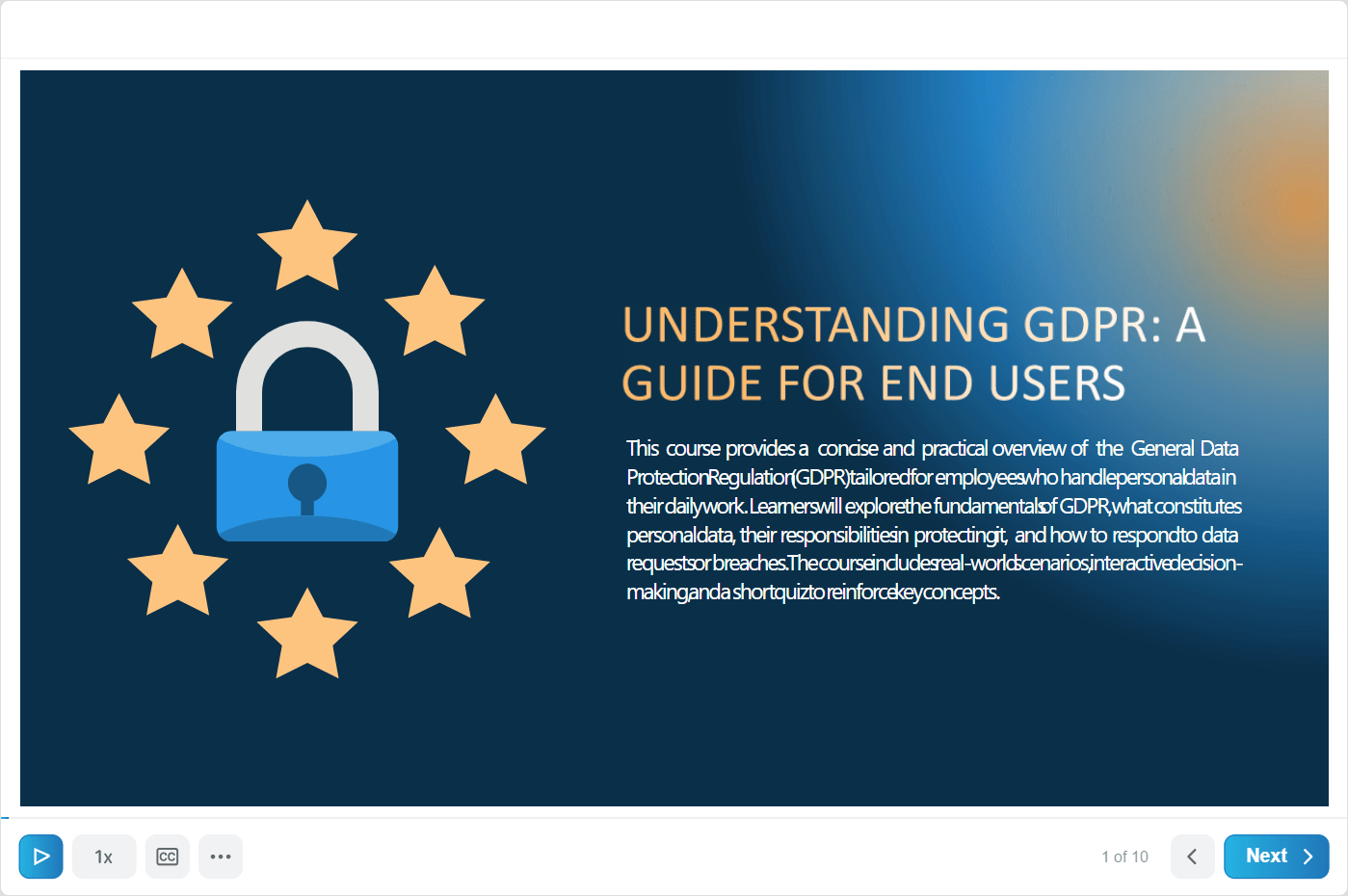 Core Course
Understanding GDPR: A Guide for End Users
Give employees a concise, practical overview of GDPR so they can handle personal data more responsibly and respond appropriately to privacy-related requests or incidents.
Core Course
Understanding GDPR: A Guide for End Users
Give employees a concise, practical overview of GDPR so they can handle personal data more responsibly and respond appropriately to privacy-related requests or incidents.
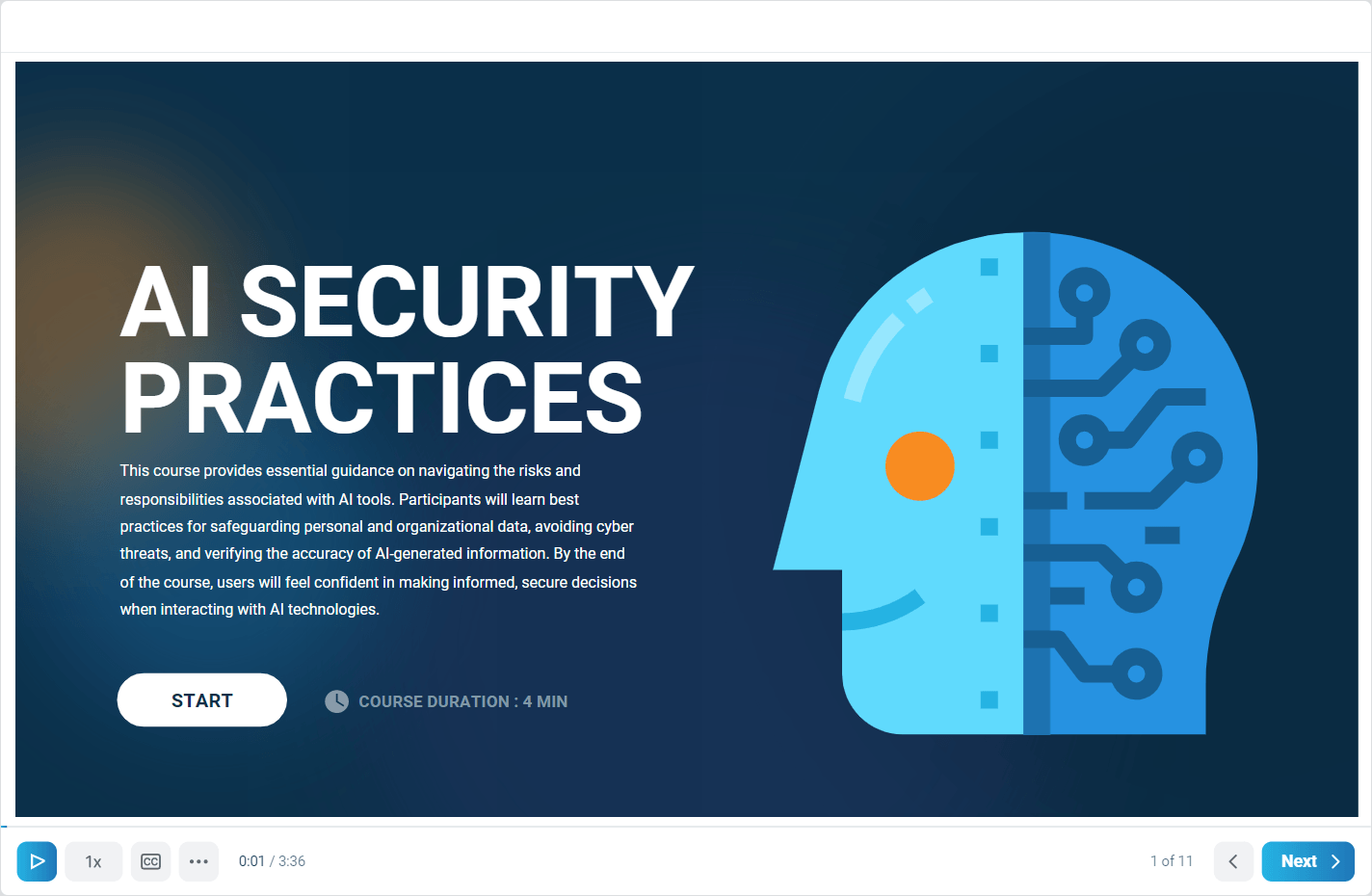 Core Course
AI Security Practices
Teach employees how generative AI and everyday AI tools change cyber risk, from prompt leakage to unsafe sharing and unverified outputs.
Core Course
AI Security Practices
Teach employees how generative AI and everyday AI tools change cyber risk, from prompt leakage to unsafe sharing and unverified outputs.
Build a security awareness training program that adapts to the employee lifecycle, phishing behavior, and ongoing reinforcement needs.
Enroll employees into baseline awareness training as soon as they join.
Run recurring programs with reminders, tracking, and completion visibility.
Turn failed simulations into immediate coaching and targeted remediation.
Use SecurityTips to make awareness feel present without adding heavy training friction.
Quick answers for teams planning continuous employee awareness training, compliance support, SecurityTips reinforcement, and phishing remediation.
A continuous security awareness training program reinforces secure behavior throughout the year with phishing simulations, assigned courses, new hire training, remediation, SecurityTips reminders, and reporting instead of relying only on one annual training event.
PhishingBox helps teams assign, track, and report on security awareness training that supports programs aligned to SOC 2, HIPAA, PCI DSS, ISO 27001, GDPR, and other internal or industry requirements. Training supports compliance efforts, but certification or legal compliance depends on the full control environment.
Yes. SecurityTips can be used as lightweight reinforcement between campaigns and courses, helping teams keep cybersecurity reminders visible inside the normal flow of work.
Yes. PhishingBox can connect phishing simulation results to training moments and follow-up course enrollment so risky behavior becomes a clear remediation workflow.
Yes. The PhishingBox course library includes topics such as phishing awareness, information security, data privacy, HIPAA training for end users, and GDPR training for end users.
Use PhishingBox to assign training, reinforce secure behavior, connect phishing failures to remediation, and keep reporting ready for compliance conversations.